Sep 23, 2026Comparisons
Cummins Natural Gas vs Diesel Generator: Which G-Drive Fuel to Specify
Cummins natural gas vs diesel G-Drive: one generator job, two fuels. How to specify the right one for your site — pipeline vs stored fuel, emissions, runtime and NFPA 110 transient.
By the Cummins Motor Team — the engineers and export specialists at Cummins Motor Co., Ltd., Xiangyang, China, who quote, inspect and load-test these engines.
Choosing natural gas vs diesel for a Cummins generator set looks like a fuel preference, and it is not. The choice is decided by the site: what fuel reaches it, what the zoning allows, and how long the set must run without a delivery.
This comparison covers the generator-drive engine itself — the G-Drive — not the whole genset. Both fuels do the same electrical job; they differ in supply, emissions, autonomy and the aftertreatment each one needs.
A G-Drive is rated for one fixed speed and one alternator frame. The fuel question is really a site question — and the wrong answer is a pipeline you do not have, or a tank you cannot permit.
1. A G-Drive Engine Is Rated for One Job
A generator-drive engine is matched to an alternator and run at a governed speed — typically 1500 rpm on 50 Hz or 1800 rpm on 60 Hz. The rating is then quoted as standby or prime, and the set is sized to the load it must carry, not to a vehicle duty cycle.
So the natural gas vs diesel question is not about which engine is stronger. It is about which fuel your site can actually receive, store and permit — and which one the local emissions rules let you run where the set will sit.
2. What the Fuel Actually Changes
Fuel supply decides everything else. Natural gas needs a pipeline or an LPG tie-in at the site; diesel needs a tank you own and fill. If the site has no gas line, the comparison ends there.
Emissions and zoning follow the fuel. Natural gas burns cleaner — lower NOx and particulate matter — and needs no diesel particulate filter or selective-catalyst reduction. That matters where air rules are tight.
Autonomy is the diesel advantage. Stored diesel lets a set run for days with no external supply, which is why remote mines, rigs and offshore sites default to it. Gas is tied to its pipe.
Noise and aftertreatment differ too. Gas sets are quieter and carry a three-way catalyst; diesel needs routine exhaust aftertreatment and sits louder. Both are manageable, but they shape where a set may be placed.
3. Where Natural Gas Wins
Natural gas fits a built environment with a gas line and strict air rules — city buildings, hospitals, data centers and district plants. The cleaner burn and the quieter operation are why it is specified there rather than at a remote site.
Cummins builds a spark-ignited gas G-Drive in the GTA855 Lean Burn Gas Series: a 14-litre engine rated 153 kW standby at 50 Hz and 245 kW at 60 Hz. It is built for standby duty with NFPA 110 transient capability.
That same engine will run on fuels from 33 methane number up to pipeline natural gas, including well-head and non-standard gas down to 800 BTU per cubic foot — so associated gas at a site is within its design envelope.
For a site already on gas, the operating case is strong: predictable fuel pricing, no diesel storage to permit, and lower on-site emissions. The trade is the pipe — if it is cut, the set is cut with it.
4. Where Diesel Wins
Diesel fits where the gas line does not reach: off-grid mines, oil and gas sites, crushing and rental duty, and any location whose power must be self-contained. The stored fuel is the whole point — the set owes nothing to a utility.
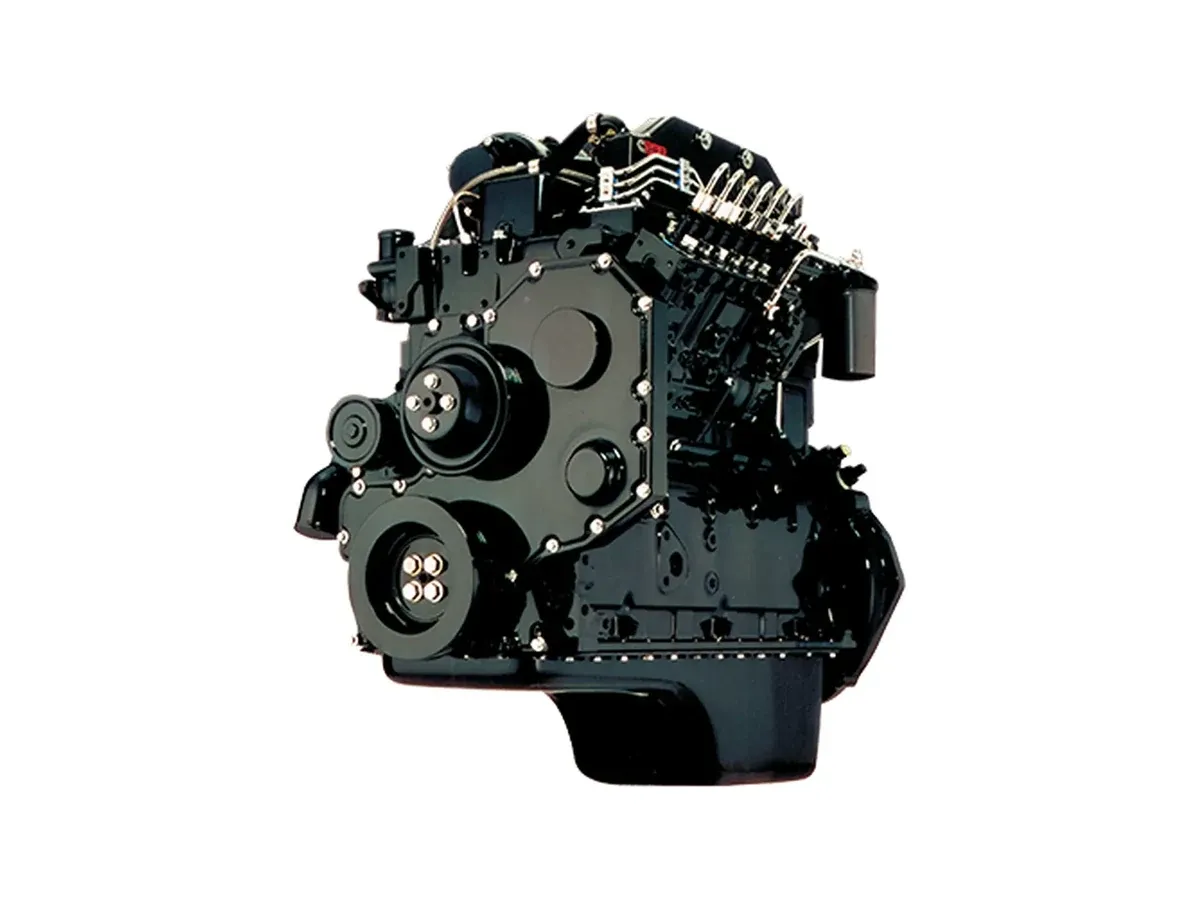
Our own diesel G-Drive range starts at the 4BT3.9-G at 36 kW (48 hp) and the 6BT5.9-G at 86 kW (115 hp), moves through the QSB6.7-G at 173–209 kW (232–280 hp), and extends up through the QSC, QSL, QSZ, QSK and KTA families for high-kilowatt standby and prime sets.
Diesel also carries the higher energy density — roughly triple that of natural gas — so it does more work per unit of fuel and runs longer on the tank it already holds. For a remote or harsh site, that self-sufficiency is usually the deciding factor.
5. The Fuel-Choice Spec Rules
Specify by the fuel the site can actually receive. If there is no gas line and no LPG tie-in, specify diesel. Do not design a set around a utility connection the site does not have.
Specify by the emissions zoning, not by preference. Where NOx and particulate limits are strict, write the gas option into the requirement; where they are loose, diesel aftertreatment handles it.
Specify by autonomy — how long the set must run unattended. Multi-day autonomy favours stored diesel; a utility-tied site with clean-air rules favours gas.
Specify the transient capability the load needs. Block-load pickup to NFPA 110 is a rated behaviour, not an afterthought. Confirm it in writing for any life-safety or critical standby set.
Consider dual-fuel only for critical sites. Hospitals and microgrids sometimes specify sets that can run on either fuel, so a gas interruptions does not stop the power. Treat it as a site-resilience option, not a default.
6. A Note on Cummins Natural Gas G-Drive Availability
Cummins offers the GTA855 as its spark-ignited gas G-Drive — the generator-drive engine, not a complete set. Separate Cummins Westport engines, the ISL G and ISX12 G, are on-highway natural-gas units for trucks and buses; they are not generator-drive products and should not be specified as such.
We supply the diesel G-Drive side of this comparison across the B, C, QSB, QSC, QSL, QSZ, QSK and KTA families. Where a project calls for natural gas, the GTA855 is the Cummins gas G-Drive to specify against; where it calls for stored fuel and autonomy, our diesel range is the fit.
7. Specify It, Then Verify It Before You Pay
The nameplate on the delivered engine is what you check the purchase order against, because the plate describes the engine that actually arrived. Model, rated power and rated speed stamped on it are the figures to compare against the quote.
Before money moves, ask for three things in writing: a straight-on photograph of the whole nameplate, the serial number and Control Parts List, and a load-test record carrying that same serial number. Then confirm the rating quoted is the one the CPL supports.
Add the export documents — invoice, packing list and certificate of origin — that repeat the same serial number and CPL. Your forwarder, your bank and your customs broker will ask for the same set, whether the engine burns gas or diesel.
Frequently Asked Questions
Is natural gas or diesel better for a generator?
Neither is universally better. Natural gas wins where a gas line exists and air rules are strict — city sites, hospitals, data centers. Diesel wins where there is no pipe, or where the set must run for days unattended. Specify by site fuel, zoning and autonomy, not by preference.
Can a Cummins natural gas G-Drive run on well gas?
The Cummins GTA855 gas G-Drive is built for it. It runs on fuels from 33 methane number up to pipeline natural gas, including well-head and non-standard gas down to 800 BTU per cubic foot, so associated gas at a site is within its design envelope.
What emissions equipment does a diesel G-Drive need?
A diesel G-Drive needs routine exhaust aftertreatment — typically a diesel particulate filter and selective catalytic reduction — to meet current limits. A natural gas set needs only a three-way catalyst and no DPF or SCR, which is why gas is favored under tight air rules.
How long can a diesel generator run without refueling?
A diesel set runs as long as its tank holds — typically days of autonomous operation with no external supply, which is its main edge over gas. A natural gas set is tied to its pipeline and stops if that supply is cut, however large its engine rating.
Does a G-Drive need a different rating from a vehicle engine?
Yes. A G-Drive is rated at one fixed governed speed and matched to an alternator frame, quoted as standby or prime. The same displacement in a truck is rated for a variable-speed duty cycle. Quote the generator duty, not just the model, when you ask for a price.
Before You Specify
If you are choosing between natural gas and diesel for a Cummins G-Drive, send the site fuel access, the emissions zoning, the required autonomy and the governed speed you need.
We will match the rating to the duty, confirm the natural-gas or diesel option that fits, and issue a load-test record for that serial number before the engine ships. Add the quantity and the destination port and we will reply with a quotation.