Marine Engine
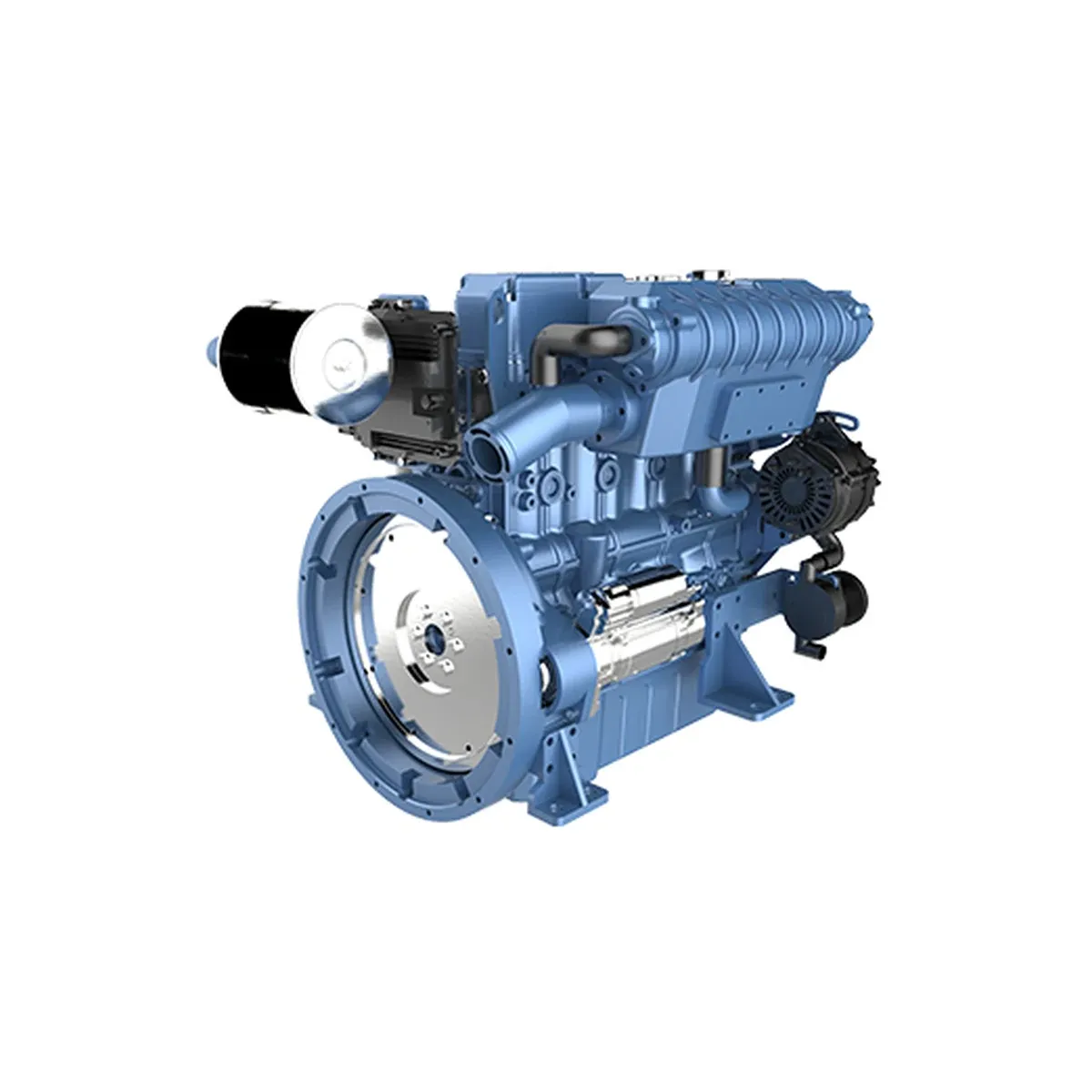
Weichai WP3.2 Marine Diesel Engine (34–49 hp)
Weichai WP3.2 3.17 L 4-cylinder diesel engine, 34–49 hp (25–36.8 kW), 5 ratings for marine work. Each unit nameplate-verified.
Specifications
- Engine Model
- WP3.2
- Displacement
- 3.17 L
- Cylinders & Configuration
- Inline 4, 4-cycle
- Rated Power Range
- 25–36.8 kW (34–49 hp) @ 1500–2400 rpm
- Aspiration
- Turbocharged Aftercooled
- Applications
- Marine
- Documentation
- Nameplate verification + load-test record per serial number
Overview
The Weichai WP3.2 is a 3.17 L 4-cylinder Weichai diesel engine supplied in 5 factory ratings from 34 hp (25 kW) to 49 hp (36.8 kW). Every rating listed on this page is a complete engine for marine duty, not a generator set, and each unit ships with its serial number recorded against the specification sheet that applies to it.
Ratings in this family differ in rated speed, peak torque and emissions tier rather than in displacement or cylinder count, so the choice between them is a duty-matching question. The specifications panel and the per-rating entries on this page are generated from the same source data, so a rating quoted here can be matched directly against a delivery document.
Specifications
The specifications panel lists the family-level values that are common to every WP3.2 rating, including the 3.17 L displacement and the inline 4-cylinder layout. Ratings that share displacement and cylinder count but differ in output are listed individually in the model selection section.
Model Selection: WP3.2 Ratings
Each entry in this section is one rating of the Weichai WP3.2. The rated power is the output at the stated speed; the peak torque figure is the value the rating develops at the lower speed shown, which is what normally decides whether a rating suits a given machine. Each rating carries a stable anchor, so a single rating can be linked or quoted directly.
WP3.2C34-15E321
WP3.2C34-15E321 — rated 25 kW (34 hp) at 1500 rpm.
WP3.2CD28E310
WP3.2CD28E310 — rated 25 kW (34 hp) at 1500 rpm.
WP3.2C37-18E321
WP3.2C37-18E321 — rated 27 kW (36 hp) at 1800 rpm.
WP3.2C41-15E321
WP3.2C41-15E321 — rated 30 kW (40 hp) at 1500 rpm.
WP3.2C50-24E321
WP3.2C50-24E321 — rated 36.8 kW (49 hp) at 2400 rpm.
Applications
WP3.2 engines in this family are normally specified for marine work.
Marine: ratings are quoted against the propulsion or auxiliary duty required, with the gearbox ratio and the duty classification taken into account.
Verification, Documentation and Ordering
Each engine is offered with nameplate verification + load-test record per serial number. That means the model and rating printed on the engine nameplate can be checked against the record issued for that serial number before shipment, which is the point most buyers of re-rated or re-exported engines want covered.
To receive a quotation, send the exact rating from the matrix above (for example WP3.2C50-24E321), the machine or application it will drive, the quantity, and the destination port. If the rating you need is not listed, send the model and the required output and we will confirm whether it belongs to this family or to a neighbouring one.
Buyer tip: Send your WP3.2 specification, quantity and destination port for a verified quotation and lead time.
Frequently Asked Questions
What is the power range of the WP3.2?
The 5 ratings listed on this page run from 34 hp (25 kW) to 49 hp (36.8 kW), at governed speeds between 1500 and 2400 rpm.
What displacement and cylinder count does the WP3.2 use?
Every rating in this family shares the same 3.17 L displacement and inline 4-cylinder, 4-cycle configuration. Ratings differ in output, rated speed and emissions tier rather than in the base engine.
What is the difference between WP3.2C41-15E321 and WP3.2C50-24E321?
WP3.2C41-15E321 is rated 30 kW (40 hp) at 1500 rpm, while WP3.2C50-24E321 is rated 36.8 kW (49 hp) at 2400 rpm. They use the same base engine; the higher rating is the one to specify when the driven load needs the extra torque at the lower speed.
How is a WP3.2 rating ordered?
Send the exact rating shown in the model selection table, the application it will drive, the quantity and the destination port. The engine is then quoted against that rating and confirmed against its nameplate and load-test record.