
Oct 14, 2026
Cummins 4BT: The Four-Cylinder B Series, From Step Vans to Swap Culture
The Cummins 4BT engine: a 3.9 L four-cylinder born in delivery vans, adopted by swap culture. 15 stocked builds, 57 ratings, 27 to 160 hp.
Born in commercial delivery vans and adopted by American swap culture, the Cummins 4BT engine is the 3.9-liter four-cylinder branch of the B series. We stock it as fifteen builds across fifty-seven factory ratings, 27 to 160 hp, mechanical and electronic. Swappers count its weight; industrial buyers count its ratings.
Two reputations share this engine, and they rarely meet. On American forums it is the compact diesel people transplant into Jeeps and old pickups — Cummins durability at a fraction of the size. In light industry it leads a plainer life, inside step vans and delivery routes [5], in small pump sets, micro generator sets, fishing hulls that never post anything. The first reputation has the loudest voice; the second has the purchase orders. This page speaks to both: what the badge decodes to, why the weight figures online refuse to agree, which of our fifteen builds fits the duty — and the one cost of this engine that the fan posts leave out.
The Family Ladder: Fifteen Builds, Two Camps
The iron comes first, because everything else hangs off it: 3.9 liters, four cylinders, the same B-series architecture as the 5.9 sibling [1]. Across the whole shelf the displacement holds steady — with a single exception at the top of the electronic camp, where the QSB4.5 stretches the design to 4.5 liters [1]. What changes is how the engine breathes, how it injects, and what job it was rated for. So the shelf splits into two camps.
Mechanical first. Then the electronics.
Camp one — the mechanical badge family
Build | Job | Factory ratings | Horsepower |
|---|---|---|---|
generator-set drive | 4 | 27–36 | |
pump drive | 2 | 30–40 | |
generator-set drive | 2 | 48 | |
pump drive | 2 | 50–55 | |
construction machinery | 6 | 80–130 | |
generator-set drive | 4 | 67–117 | |
marine propulsion | 2 | 63–87 | |
pump drive | 5 | 70–110 | |
construction machinery | 6 | 80–130 | |
generator-set drive | 1 | 129 |
Camp two — the electronic line
Every number in those two tables comes off our own product pages [1] — fifteen builds, fifty-seven factory ratings, each engine nameplate-verified before it leaves. That check takes a minute; our guide to verifying a genuine Cummins engine walks through it. This is a shelf you can order against, not a list assembled from brochures.
A few edges carry most of the story. The naturally aspirated 4B3.9 opens the shelf at 27 hp and never leaves pump and genset work. The plain turbocharged 4BT climbs into the fifties and stops there. Within the mechanical camp, every construction rating wears an A — aftercooling is where the ladder steepens — and construction posts the same 80-to-130 span on both aftercooled badges [1]; whatever separates those two lines lives behind the rating, not in a higher number. The shelf's only marine build is aftercooled too, 63 to 87 hp. And the electronic camp redraws the spread: a QSB3.9 generator build reaches 134 hp, while the QSB4.5 — the one build with more displacement than the rest — holds the family ceiling at 160 across the widest ladder we stock, eight ratings [1].
One badge declines to explain itself. B3.9CS4 leads with a B, carries no T, and still works construction duty at 67 to 111 hp [1] — the same duty as the QSB4.5 above it. What separates the two is the emissions tier, not the badge: the QSB4.5 ratings are Euro III, and every B3.9CS4 rating is China IV. I will not invent a decoding for letters that ship with no legend; the build's product page and its data sheet are the record, and that is where I send anyone who asks.
Where ours are built. We are an authorized distributor of DCEC (Dongfeng Cummins), and the four-cylinder engines on this page sit inside DCEC's 3.9-to-13-liter range. The six-cylinder story runs on the same platform logic — our 6BT guide covers it at two more cylinders.
Reading the Name
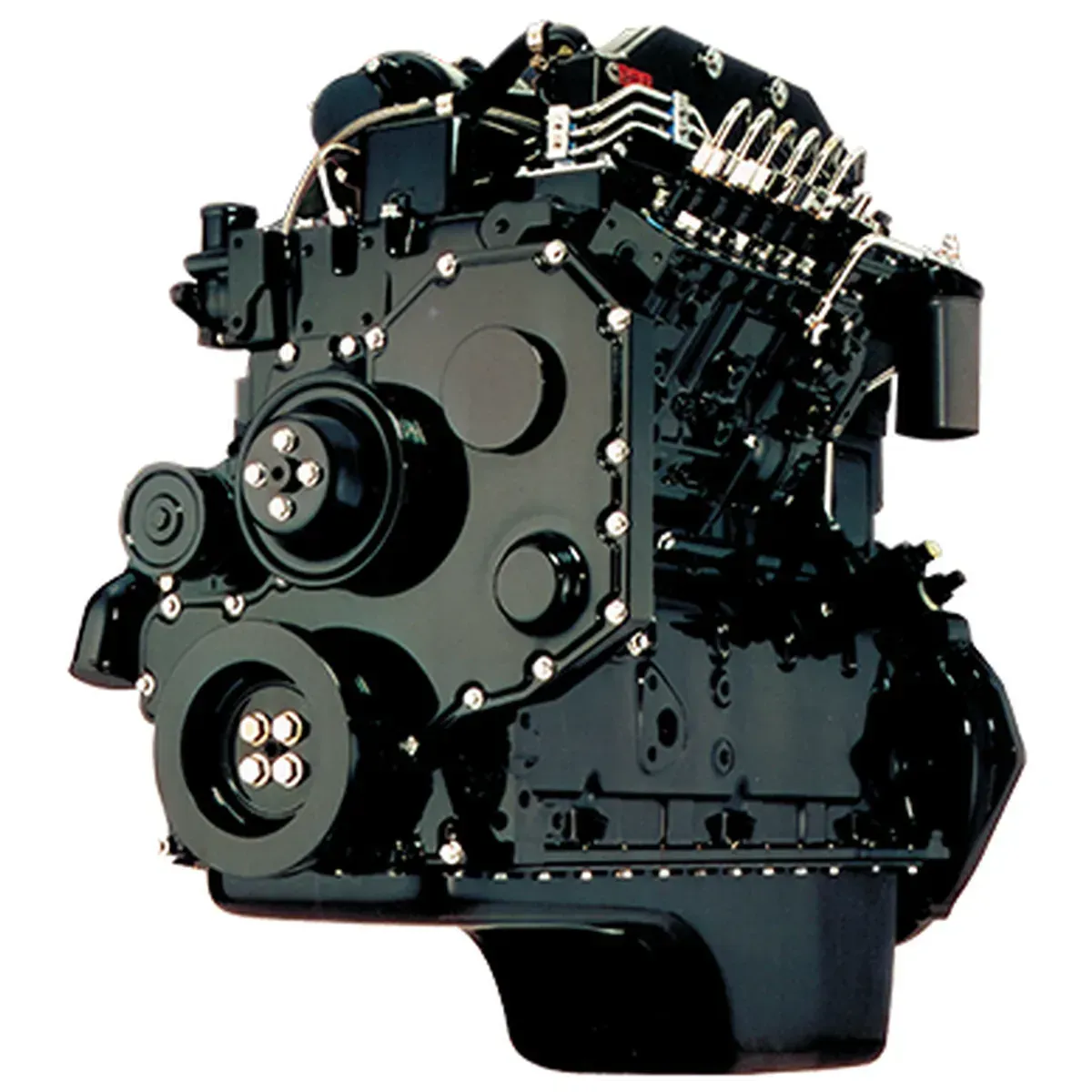
The badge reads left to right, and every character is a hardware fact. The 4 is the cylinder count — this is the small branch of the B series. B is the platform. T adds the turbocharger. A adds air-to-air aftercooling, the charge-air heat exchanger that lets one displacement carry a wider spread of ratings; the second A in 4BTAA marks that configuration line, the same left-to-right grammar our 6BT guide walks through on the 5.9. The trailing number is displacement in liters: 3.9. The duty rides at the end of the name: -G turns a generator, -M drives a shaft, -P bolts to a pump, and the plain badge — 4BTA3.9, 4BTAA3.9 — is the construction build.
What the letters cannot tell you is the family resemblance, so I will: the 4BT is the B-series philosophy with two cylinders subtracted — same conservative rating habits, same heavy rotating hardware, same parts logic, wrapped around a block short enough to lift where the 5.9 needs a plan. That is the appeal, and the parting of the ways: whatever the job asks, four pistons carry it instead of six. Hold that thought for the reliability section.
The electronic camp drops that grammar for two names of its own. QSB and ISB are the electronically controlled generations of the same four-cylinder platform; on our shelf, QSB3.9 covers generator and pump duty while ISB3.9 is the on-highway truck build [1]. How the electronic names map back onto the mechanical badges across the range is decoded in our guide to Cummins engine models and naming.
I will go one step beyond the letters and no further: what the electronic transition changed inside the engine is documented per rating, not per badge, and the forums' confident summaries are not documents. When a seller volunteers a precise decoding, ask which data sheet it came from.
The Swap Question: Why the Forums Chose This Engine
One confession belongs up front, and it is aimed at the industrial reader: the 4BT's American celebrity was not earned in your world. The engine left the factory inside commercial vans and step vans, hauling goods on fixed routes [5]. The swap community found it, weighed it against the 6BT, and did the marketing for free; only recently have the two audiences started comparing notes. A delivery-van workhorse and a forum icon are the same iron.
The forum logic is easy to reconstruct because every part of it is physical. Against its six-cylinder sibling, the 4BT is noticeably lighter and much more compact [5] — and in a tight engine bay or a thin frame, mass and bulk decide before horsepower does. It is mechanically simple, with a fuel system an owner can service without a laptop. And it is frugal; a builder on 4BTswaps planning a Tahoe conversion ranked fuel economy ahead of power output outright [4]. Light, compact, simple, frugal — four reasons, and every one of them describes the vehicle, not the engine.
The other half of the argument gets quoted less, and it deserves the same airtime. A Cummins Forum thread on replacing a 6BT with a 4BT puts the physics plainly: the power needed to hold highway speed does not shrink with the cylinder count, so the four-cylinder carries the same road load on two fewer shoulders — each piston, in effect, works harder [3]. Practical caveats travel with it: busier on long highway pulls, louder while doing it. An IH8MUD Land Cruiser owner framed the whole trade from the driver's seat — the 6BT offers more power capability, but then the frame and chassis question arrives [2]. Capability against mass; the vehicle settles it, not the spec sheet.
The frame settles it.
None of this is noise for an industrial buyer, either: a decade of swap threads is field data on what this engine does when it is loved and when it is overloaded — both halves of that record belong in your sizing math.
Our line, drawn once: we supply the industrial builds on this page, and we do not offer swap kits or conversion packages. For that project, the forums linked above are the better home. What we can do for a swapper is what we do for a pump-station buyer — read a nameplate, identify the build, hand over its factory data sheet.
Weight: The Number Everyone Quotes and Nobody Pins
Search 4bt weight and you find a scatter of figures, none of them tied to a build. Search cummins 4bt specs and the aggregator tables repeat the scatter in tidier fonts. Here is the honest version: the relative claim survives, the absolute one does not. Against the 6BT, the 4BT is clearly the lighter and more compact engine [5] — that much is safe to repeat. Any exact figure is not.
Why does the scatter exist? Not because anyone is hiding anything, but because "a 4BT" is not one engine. The turbocharger alone splits the population — early H1C units against later HX35s, hardware that does not weigh the same [6]. The injection pump splits it again: a VE where the application allowed one, a P-pump where the duty demanded the other [6]. Add the flywheel housing your application bolts on, the brackets, the cooling pack, the accessories the build shipped with, and the scale has every excuse to disagree with itself. Spec pages average all of that into one row; forums quote the row at each other for years. A weight without a build attached is not a specification — and on a skid design or a lifting plan, it is a number you trusted.
If you are sizing a skid, a hull or a machine bay: pick the build and the rating first, take the weight from that build's data sheet, then add whatever you bolt to it. Nothing else survives contact with a lifting plan.
The figure that matters is tied to the engine, not to the model name. Every Cummins engine carries an engine serial number and a CPL code, and together they retrieve the factory data sheet for that exact configuration — the figures this page leaves out included — from QuickServe Online, Cummins' free owner database. Our QuickServe Online walkthrough shows the lookup step by step. Or skip the account: send us the nameplate photo, and we will read the build and pull its data sheet. I would rather send you the right figure tomorrow than a round number today.
Light is a start. A data sheet is a specification.
Reliability: Two Views, One Coin
The reputation is real, and it was earned in the field rather than in a brochure. The mechanical B series is simple architecture done heavily: conservative ratings, strong internals, parts available on several continents, engines that outlived the equipment around them. Nothing in the four-cylinder layout changes that recipe.
The physical counterweight is the one the forums state plainly: with a third fewer cylinders than the 6BT, whatever the duty asks is split four ways instead of six [3]. Same philosophy of conservative ratings; less division of labor among the pistons. "It works harder" is an honest sentence, not a defect report — and it is the exact price of the lightness everyone praises. An engine that gives away mass gives away shared headroom with it. Sized to the duty, that price is fair. Oversized by optimism, no reputation pays it back.
Match the rating to the duty, and the legend holds.
Which Four-Cylinder for Which Job
Five directions, one shelf. Find your row:
The job | What the duty asks of a 3.9 | Start here |
|---|---|---|
Small pump sets — irrigation, dewatering, fluid transfer | steady speed, season-long hours | |
Micro and small generator sets | one speed, long hours, sized to a kilowatt target | |
Small workboats and fishing craft | steady propulsion for long hours, ratings graded by duty | 4BTA3.9-M 63–87 hp |
Light construction machinery | load swings between cycles, service measured in years | |
On-highway trucks | road duty under electronic control | ISB3.9 123–156 hp |
Marine buyers carry one extra decision, and it is a real one: marine ratings are graded by duty — how hard, how long, how often at full load. The 4BTA3.9-M's two ratings [1] should be read through that grading, which our marine engines guide explains in full.
The ISB3.9 row is the outlier by design — the only on-highway build on the shelf, rated for road duty under electronic control [1] — while the other fourteen exist for work that stays in one place. The shelf has edges in both directions, too: nothing in the B series on our stock sits below this 3.9, and the six-cylinder story resumes with the 6BT guide at 5.9 liters.
Manuals, Data Sheets and Parts
Three legitimate routes to a 4BT manual — compressed here, because our QuickServe Online walkthrough already covers the mechanics in depth. First, QuickServe Online: a free owner account, your engine serial number, and the owner literature and parts data registered against that engine. Second, official channels: data sheets and service literature through Cummins' publication system and its distributors. Third, us: nameplate photo in, build identified, factory data out with the quote. We do not host or reproduce copyrighted manuals. Parts carry the same condition — serial number first, quote second — as our genuine parts guide explains.
Before You Go
Three facts close the loop: the badge explains the breathing, the duty explains the badge, and the data sheet explains the numbers. Everything a seller can honestly quote lives in the last one.
Send us the nameplate photo and we will read the build and pull its data sheet — weight included, since this page declines to guess at it. Or request current pricing and availability for the build you have already settled on. No prices appear here on purpose: they move with the build, the rating and the freight lane, and a price printed in a blog post is expired before anyone reads it. The full engine range is one click away while you wait.
Weight starts the conversation. The rating closes it.
Frequently Asked Questions
How much horsepower does a Cummins 4BT have?
It depends on the build, because 4BT names a platform, not an output. Our stock spans 27 to 160 hp across fifteen builds and fifty-seven factory ratings [1] — from the naturally aspirated 4B3.9 at 27–36 hp to the electronic QSB4.5 at up to 160. Figures quoted on swap forums describe converted automotive applications under automotive duty, not factory industrial ratings. Read the duty first; the horsepower only means something next to it.
How much does a 4BT weigh?
There is no single figure worth printing. The build's configuration moves the number: early H1C turbochargers against later HX35s, a VE injection pump against a P-pump, the flywheel housing, the accessories [6]. The official weight sits on the data sheet for the specific build — pulled by its engine serial number and CPL from QuickServe Online, or send us the nameplate photo and we will pull it for you.
Is the 4BT reliable?
Two honest answers. The mechanical B-series recipe — conservative ratings, heavy internals — carries the platform's reputation into the four-cylinder branch. The caveat is arithmetic: with a third fewer cylinders than the 6BT, each piston carries a larger share of the load, which is why owners say it "works harder" [3]. Matched to the right duty, the reputation holds; asked to oversize, it does not.
4BT vs 6BT — which should I choose?
The duty and the vehicle decide, not the badge. The 6BT brings more power capability and more mass; the 4BT answers with lightness, compactness, mechanical simplicity and lower fuel burn [5] — and with a bigger share of the work on each of its four pistons [3]. In a swap, the frame and chassis question usually settles it [2]. In industry, the rating against the duty settles it.
What is the difference between 4BT and 4BTA?
The A. T marks a turbocharged engine; A adds air-to-air aftercooling, which cools the compressed intake charge and lets the same 3.9 liters carry a wider spread of ratings. 4BTAA applies that line again — the same left-to-right grammar the six-cylinder badges use.
What did the 4BT come in from the factory?
Commercial vehicles — step vans and delivery trucks [5] — plus the industrial duties it still holds: pump sets, generator sets, construction machinery and small boats. Its American swap fame came later, from the aftermarket; the factory job was always work.
Do you sell 4BT engines for swaps?
No swap kits or conversion packages — we supply the industrial builds on this page: fifteen builds, fifty-seven ratings, each one nameplate-verified and quoted, tested and shipped [1]. If the project is a swap, the forums linked in the guide are the right home. If it is a pump, a genset, a hull or a machine, send the build and rating and we will confirm availability with current pricing.
Where can I get a 4BT manual?
Three legitimate routes. QuickServe Online — a free owner account that retrieves the owner literature and parts data registered against your engine serial number. Cummins' official publication channels and distributors, for data sheets and service literature. Or ask us: nameplate photo in, build identified, factory data out with the quote. We do not host or reproduce copyrighted manuals.